
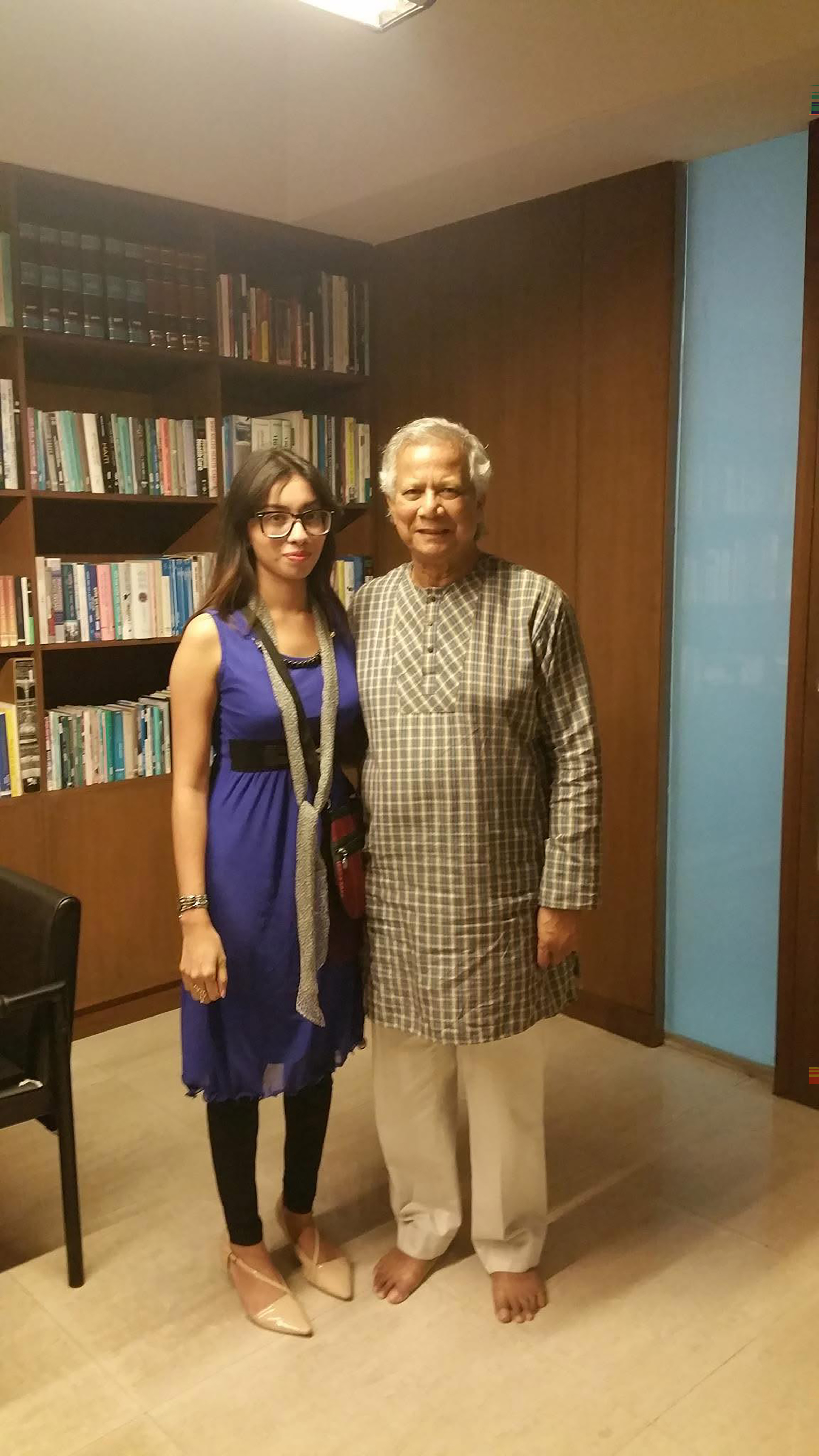
Nobel Peace Prize laureate and eminent economist Dr Muhammad Yunus was recently seen engaging with an admirer during a private interaction in Dhaka. The moment, captured in a photograph, reflects the continued public interest and respect Dr Yunus commands for his decades-long contribution to social business, poverty alleviation and inclusive development.
The interaction took place in a quiet, book-lined setting, underscoring Dr Yunus’s long association with academia, research and thought leadership. Known globally as the founder of the Grameen Bank and the pioneer of microcredit, Dr Yunus has remained a source of inspiration for young professionals, students and social entrepreneurs across generations.
Observers note that such personal encounters highlight Dr Yunus’s accessibility despite his global stature. Admirers often cite his work on empowering marginalised communities, particularly women, and his advocacy for social business as a sustainable alternative to traditional profit-driven models.
As Bangladesh continues to navigate social and economic challenges, figures like Dr Yunus remain central to public discourse both at home and abroad. Moments like these serve as a reminder of the enduring influence of ideas rooted in human dignity, innovation and social responsibility.
Dr Yunus’s enduring appeal lies not only in his Nobel Prize-winning work but also in his consistent engagement with grassroots realities. Over the decades, his philosophy of “credit as a human right” has reshaped development economics and influenced policy frameworks worldwide. From rural Bangladesh to global forums such as the United Nations and World Economic Forum, his ideas have challenged conventional notions of charity and aid, advocating instead for dignity, self-reliance and opportunity-driven growth.
The photograph reflects a quieter, human side of the globally recognised economist—away from podiums and international summits. Such interactions have become symbolic of Dr Yunus’s belief that meaningful change begins with individuals. Admirers often describe these encounters as deeply motivating, citing his willingness to listen, his humility, and his encouragement of youth-led innovation as defining traits of his leadership style.
In recent years, Dr Yunus has continued to be an influential voice on issues ranging from social business and climate justice to ethical capitalism. His emphasis on zero-profit, zero-dividend social enterprises has gained renewed relevance amid growing global concerns about inequality and environmental sustainability. Economists and development practitioners view his model as a viable framework for inclusive growth in emerging economies.
As Bangladesh’s most internationally recognised public intellectuals, Dr Yunus’s presence continues to resonate strongly within civil society and beyond national borders. Encounters like this reinforce his image not merely as a Nobel laureate, but as a mentor figure whose life’s work continues to inspire dialogue on equitable development, social responsibility and the moral purpose of economics.